Wednesday, October 14, 2015

Reading Plan

For week 9 I plan on reading Nine Ideal Indian Women by Sunity Devee. The reading unit I plan on reading is the epic women one.  And for weeks 10 and 11 I plan on reading the stories of Krishna and Shiva in the Cradle Tales of Hinduism by Sister Nivedita.  I plan on finishing for weeks 12 - 14 by reading The Story of the Great War: Some Lessons from the Mahabharata by Annie Besant.
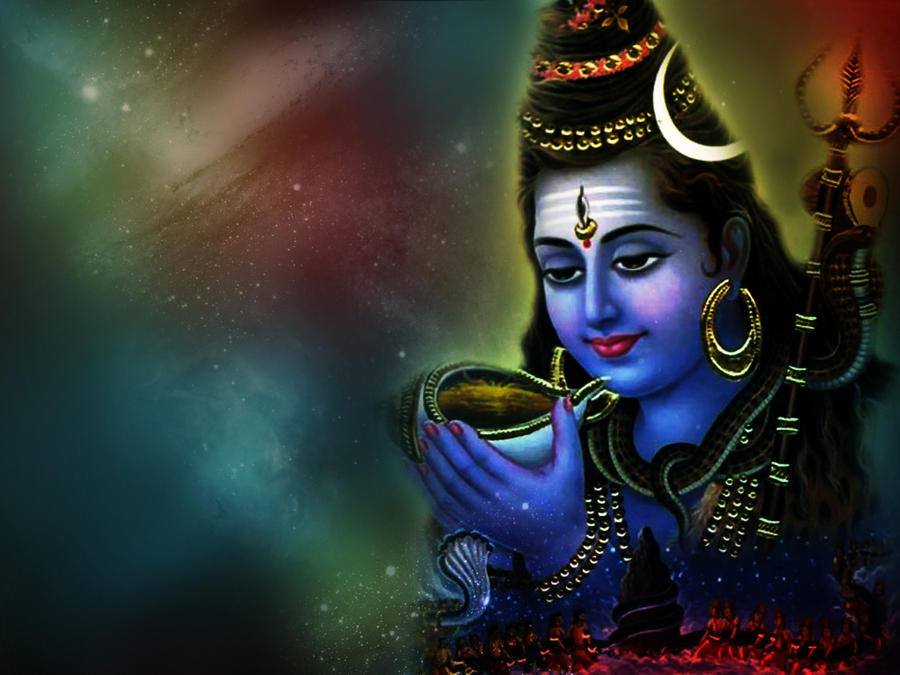
Shiva (Source: DeviantArt)


Bibliography:

Title: Nine Ideal Indian Women
Author: Sunity Devee
Year: 1919

Title: Cradle Tales of Hinduism
Author: Sister Nivedita
Translator:
Year: 1907

Title: The Story of the Great War: Some Lessons from the Mahabharata
Author: Annie Besant
Year: 1899


Tuesday, October 13, 2015

Reflections: Looking Forward

For the second half of the semester plan on doing my homework earlier in the day so that I can spend more time thinking what I will write instead of quickly thinking and then writing.  I would also like to try to get ahead in my assignments so that I do not have to stress every night.  For my writing, I would like to try to make my writing easier to be drawn into so that the reader can experience the story better.  I am hoping that for my reading that I choose some complex stories because I enjoy challenges.  I hope that I interact more with the other students over the second half of the semester.  I also don’t plan to do growth mindsets or curations unless I want some bonus points.  I hope that this class continues to require me to invest time so that I can learn.

Inspirational Quote (Source: staticflickr)
                                                           

Reflections: Looking Back

Over the course of the semester, so far, I think I have defined the path I want my writing to take but one of my most interesting pieces was from the earlier weeks of the class.  It is Rama and the Cursed and it is told from the viewpoint and is told in a report style.  One of my most favorite readings so far has been the Mahabharata.  One of my favorite stories in there is how Arjuna got his celestial weapons during his exile.  The interactions in this class are unique.  While I do not have any relationship with other students, I recognize the names.  For this class, I do the homework with all of my other homework throughout the day with priority to whatever is due first.  This schedule has remained the same throughout the semester.  I do some of my homework on campus but most of my homework is completed at my apartment.  After the first couple of weeks, I have not done another growth mindset challenge.  I would say that this class has been a good opportunity to practice the growth mindset activities.  If I do the work, I get a good grade but I also have to revise the work, and continue to improve my writing every week.  Like with the growth mindset I did not do any curation after the first couple of weeks.  I am able to keep track of what I learn each week and find it easily because most information I usually download and save.  

Snail crawling (Source: staticflickr)

Thursday, October 8, 2015

Storytelling Week 7: The Disciple of None

When word began to travel around that Drona had begun to train the Pandava and Kaurava princes in war other nobles and princes began to flock to Drona from neighboring kingdoms.  One of the princes that happened to flock to Drona from one of the other kingdoms called Nishadha was Ekalavya.  He was from non-Aryan birth and was of a lower race.  When Ekalavya finally arrived at Hastinapur he approached Drona and said to him, “Guru you are well versed in the arts of war please teach your humble student in the art of war.”

When Drona heard this, he was pleased with Ekalavya and said to him, “Boy what is your name?”
Ekalavya then replied saying, “I am Prince Ekalavya of Nishadha.”

When Drona heard this he was saddened because Nishadha was an enemy nation and Ekalavya was of a lower race than the Aryans.  Therefore, he could not teach Ekalavya the ways of war lest the secrets of warfare be revealed to him.  Then Drona said to him, “Boy I cannot teach you go back to your home.”

So Ekalavya left and went into the forest and made a clay statue of Drona that he revered as his teacher.  Ekalavya then began training in archery day and night hoping that one day Drona may look at him with pride.  However, one day a dog appeared and began to bark so Ekalavya turned and shot seven arrows in the mouth of the dog in an instant.  The dog ran away in pain to his masters who happened to be the princes.  When they saw the dog, they marveled at the skill of the archer and began to seek the archer.  When they finally found Ekalavya, they said to him, “Are you the one who shot the dog seven times in the mouth so that it can no longer close its mouth?”

Ekalavya replied, “I am a disciple of Drona like yourselves, my name is Ekalavya, prince of Nishadha.”

So the princes left and told Drona of what they had seen and heard.  Drona at hearing what Ekalavya had said was filled with anger and rushed to meet him.  When he arrived, Ekalavya prostrated himself and Drona asked Ekalavya, “is it true that you are my pupil?”

Ekalavya replied, “If it is the master’s will I am.”

So Drona replied, “A teacher’s fee is required to become my pupil.  If you have not the money a sacrifice must be made.”

Ekalavya quickly answered, “All that I have will be but yours if you ask for it.”

“Cut off your right thumb” said Drona.

Ekalavya without a look of sadness grabbed his knife, cut of his right thumb, and handed it to Drona. Then Drona said, “I do not train cripples and left Ekalavya.” 

When Drona had left, Ekalavya tried to fire his bow again but when finding he could not he began to weep.

Ekalavya cutting off his thumb (Source: wikipedia)

Author’s note: 

This week’s story was inspired by the story of Ekalavya.  This story follows along roughly the same story but I added depth to the story hoping to generate more understanding into why Drona did what he did.  I hope that as this story is read the reader will feel for Ekalavya but at the same time feel for Drona who most likely would have loved to be able to train Ekalavya.  

Bibliography:
"Myths of the Hindus and Buddhists" by Sister Nivedita (1914)

Tuesday, October 6, 2015

Reading Diary B: Myths of the Hindus and Buddhists by Sister Nivedita

I am reading Myths of the Hindus and Buddhists by Sister Nivedita.  Within the text, I read the story of the Mahabharata.  A story that stood out to me in the text was the story of Amba.  I found it odd that she blamed Bhishma for her rejection by King Shalva.  However, when she was being awarded as a prize at the swayamvara she never told her father or Bhishma that she had promised herself to King Shalva.  Instead, she waits until right before the wedding and then Bhishma releases her to go marry King Shalva.  Also she probably could have gone back and married to the king Vichitravirya but instead she goes and lives in an ashram.  There she fuels her anger against Bhishma and vows to kill him.  Then after Shiva tells her that in her next life, she will kill Bhishma.  So then, she builds herself a funeral pyre, lights it and then throws herself on it killing herself.  It is curious that any of the gods would support her.  If Bhishma had not come and she was given to another king, she would have been angry with him.  Instead, most of the blame should have been placed on her.  After she died, she was reincarnated as Shikhandini who was a princess but was raised as a princess.  Then she makes a deal with a yaksha, turns into a man, and goes into battle as a male to kill Bhishma.  It was very troubling how deep a grudge could go.  If Bhishma had been an evil man and it had all been his fault, it would have been more reasonable.  However, as it was Amba was just shirking the responsibility for her actions.  

Bhishma refusing to fight Shikhandi (Source: wikipedia)

Monday, October 5, 2015

Reading Diary A: Myths of the Hindus and Buddhists by Sister Nivedita

I am reading Myths of the Hindus and Buddhists by Sister Nivedita.  Within the text, I read the story of the Mahabharata.  One of my favorite stories in the reading was the story of Ekalavya.  I found that it was interesting that Drona rejected him.  Considering what had happened to Drona in the past, it seems like Drona would be more sympathetic with Ekalavya.  Instead, when Drona finds out that he had claimed to be his pupil he had Ekalavya pay a teacher’s fee and he cuts of his right thumb and loses his ability to shoot the bow.  This was all because he was a low cast prince of non-Aryan birth and it would be bad if he became better than the princes and learned all the secrets of military science.  Another story that I liked was the story of the princes attacking King Drupada at Drona’s bequest.  I found it amusing that after all the training that the Kaurava princes received, they still rushed in and did not have a good strategy, and as a result, the princes were routed.  However, when the Pandavas attack the use strategy and are able to easily defeat King Drupada.  In addition, after Arjuna had captured King Drupada the Kaurava princes were angry and wanted to sack the Panchala capital even though the Kauravas had first received the chance to capture him.  Another oddity about that was that King Drupada was able to wound both Duryodhana and Karna.  The reason this was odd was the fact that Duryodhana and Karna were almost as powerful as Bhima and Arjuna respectively.  

Ekalavya cutting off his thumb (Source: wikipedia)

Thursday, October 1, 2015

Storytelling Week 6: The Regret of a Future King

Yudhistira wept over his fallen family members.  He and his brothers had committed fratricide on a grand scale because of the wickedness of a few individuals.  “What will I do now that the war is over, that our family has been nearly destroyed?  I wish that I had known that Karna was my brother.  I would have gone to him and had him become our king.  How shall I repent for this?” thought Yudhistira.

His brothers were with him and Yudhistira said to him “Our family, who had become our enemies, which we killed, has been granted the right to go to heaven.  However, it does not grant me peace.  Arjuna I will go out into the wilderness and seek renunciation.”

At these words Yudhistira’s brothers were frustrated and rightfully so they thought.  They had endured years of misfortune and they had steeled their resolve to kill their family members.  Now, Yudhistira wanted to shirk his duty and go into solitude.  Arjuna said to him, “We have sacrificed so much for this; we cannot turn back from the path before us.  To turn back now would make those that had died die a worthless death.” 

Then Bhima said to him, “If you speak so about what we have done, it would have been better not to have waged war against Duryodhana.  We should have let Dhritarashtra have his way with us instead.  If not for Dhritarahtra, Duryodhana and all our family would be at peace.  You have a duty to your family and all of your followers; your cast that you were born with cannot be changed.  You have to take up the crown and rule this nation. 

Then the younger brothers, Nakula and Sahadeva, spoke to Yudhistira saying, “We have stood by your side all these years and we went into battle for you knowing that we would be fighting our family.  Do not dishonor those that have died by running away.  Dhritarashtra is probably happy thinking that he was able to defeat you in the end.”

After all this Yudhistira was still did not think that he should be king and that he should go into the forest and seek renunciation.  Therefore, Krishna spoke to Yudhistira, “Disregard your own feelings on this matter.  You have wallowed around for long enough.  You cannot think about only yourself you have to act for all that have fought and died and you have to think about all the people that need to be led.”


So Yudhistira decided to become king and led the kingdom for years.

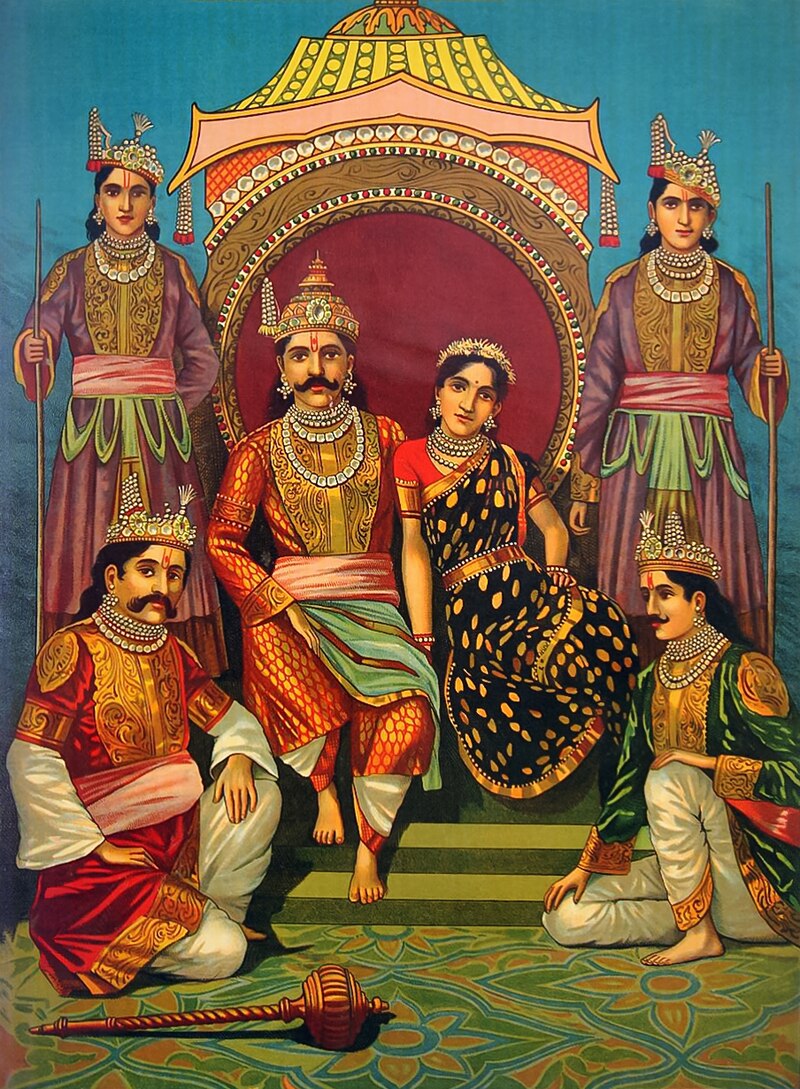
Draupadi and Pandavas.jpg
The five Pandava brothers and Draupadi (Source: wikipedia)

Author's Note:  I read The Mahabharata by R. K. Narayan.  For this week I decided to do a variation on the scene were Yudhistira does not want to become king anymore and is saddened by the loss of his family.  For my version I followed the original version for the most part and added in my own version of the conversation which I think got to the root of the problem.  I also added a little spin to the tail by making Duryodhana a good person.

Bibliography:

The Mahabharata: A Shortened Modern Prose Version of the Indian Epic by R. K. Narayn (1978)